
TheArsenale Perspectives / Brand Design
Illustration language
Give a graphic signature a clear reason to exist.
What it means
Illustration language defines how drawing, mark-making, characters or graphic treatments express a brand. It can simplify complex ideas, introduce an artistic viewpoint or give a familiar product a surprising presence. The system should specify where illustration adds meaning and how it relates to other brand assets.
Why a CMO invests in it
For a CMO, a distinctive illustration approach can create recognisable campaign material and a productive partnership with an artist. The gain comes from the connection between the artist’s language and the brand’s story. A borrowed style without that connection risks becoming a temporary visual effect.
TheArsenale portfolio
Renault Twingo E-Tech × Joshua Vides
Creative Collaboration, Live Art Experience
View the full project ↗The documented case
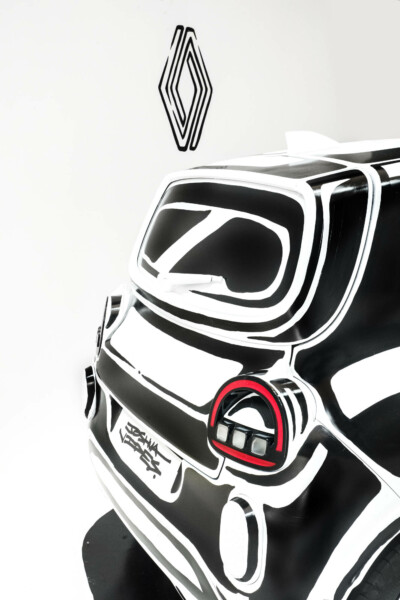
TheArsenale brought Renault and Joshua Vides together to turn the Twingo E-Tech electric into a live art experience. At the Renault Carwalk in Paris, visitors watched the artist reinterpret the vehicle in his signature black-and-white style.
Bold outlines gave the car the appearance of a drawing brought into three dimensions. TheArsenale orchestrated the collaboration and its public setting, making the process of transformation part of the project itself.
The finished art car connects Renault’s city-car identity with contemporary graphic art, while the live format opens the creative process to the audience.
The marketing lesson
Joshua Vides reinterpreted Renault’s Twingo E-Tech electric in his black-and-white graphic style during a live experience at Renault Carwalk in Paris. TheArsenale orchestrated the collaboration and its public setting. Bold outlines made the three-dimensional car read like a drawing. The case shows how a graphic language can work beyond a poster, changing the way people see an actual object.
What does this illustration make visible about the product or brand that was previously easy to overlook?
What the work produces
Creative rationale; artist brief; style principles; application and production tests; adaptation and rights framework.
The exact scope is defined for each brief; this is a practical guide to the discipline.
What to measure
Assess recognition of the treatment, understanding of the partnership and consistency across surfaces. For a physical intervention, also review how clearly the work reads in person and in images.
These are suggested evaluation criteria, not reported results for the case above.